Quick answer
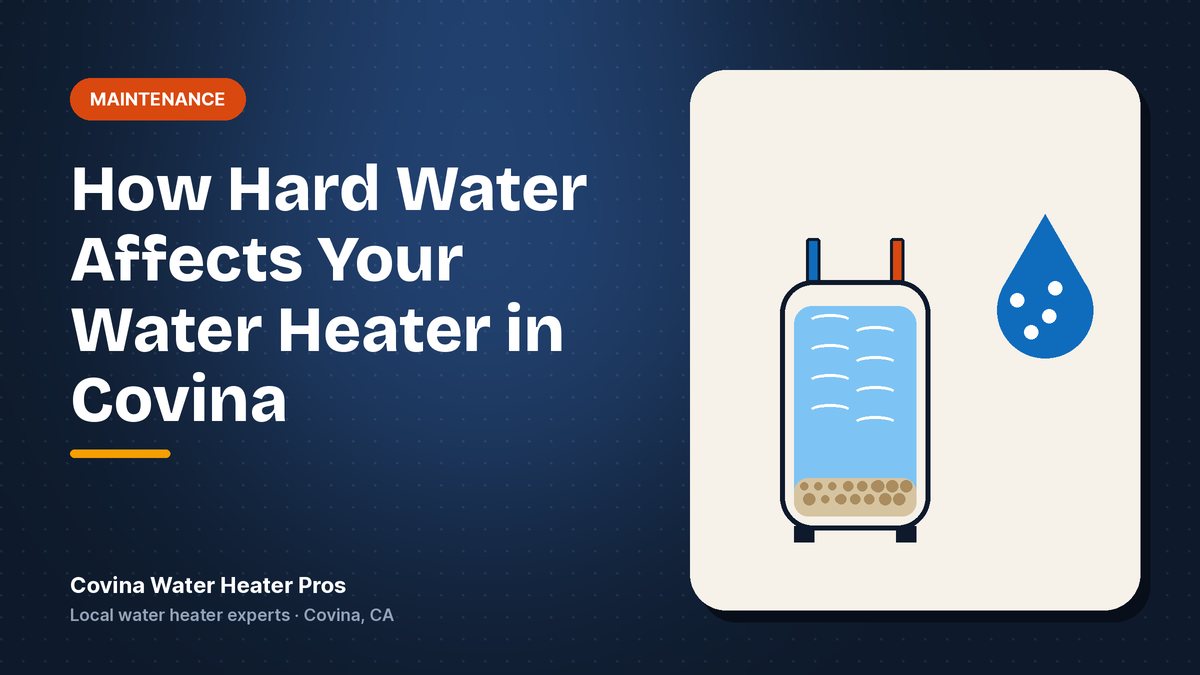
Hard water contains dissolved calcium and magnesium that come out of solution when heated. In a tank, they settle as sediment that causes rumbling, reduces capacity and overheats the tank bottom. In tankless heaters, they form scale on the heat exchanger that causes error codes and reduced flow. Annual flushing or descaling, a fresh anode rod and a water softener help protect your heater.
Need it fixed today? Call (626) ***-****How Hard Is Covina's Water?
Much of the San Gabriel Valley draws from local groundwater and imported water that's considered hard to very hard. Water hardness can vary by neighborhood and supplier, and your water provider's annual water quality report lists the actual numbers. You don't need a test kit to see the signs, though: white spots on dishes, crusty showerheads and soap that doesn't lather well.
What It Does to a Tank Water Heater
- Sediment buildup on the tank bottom, which reduces capacity.
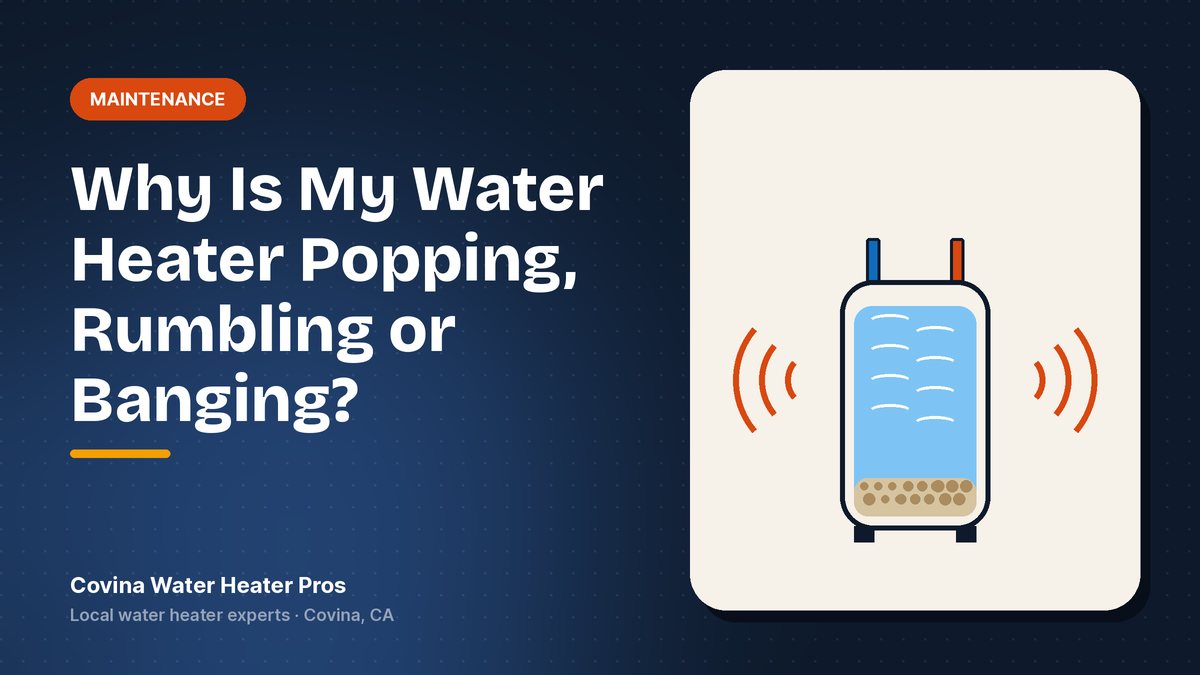
- Rumbling and popping as water trapped under sediment boils. See water heater noises.
- Higher gas bills because sediment insulates water from the burner.
- Overheated tank bottom that stresses the glass lining and speeds corrosion.
- Clogged drain valves that make flushing harder.
- Burned-out elements in electric models.
Not sure what's wrong with your water heater?
Talk to a local Covina technician now. Honest advice, upfront pricing.
What It Does to a Tankless Water Heater
Scale coats the inside of the heat exchanger, reducing heat transfer. The unit runs hotter, flow drops, and you start seeing error codes. Without descaling, scale can permanently damage the heat exchanger. See how to descale a tankless water heater.
How to Protect Your Water Heater
- Flush tanks once a year (step-by-step guide).
- Descale tankless units once a year.
- Inspect the anode rod every 2–3 years.
- Keep temperature around 120°F, since hotter water drops minerals faster.
- Install a water softener or scale inhibitor. See water softeners and water heaters.
Pro tip: Our maintenance guide for Covina hard water has a printable annual checklist.
This article is general information for Covina-area homeowners. Gas, venting and electrical work should be done by a licensed professional. For help with your specific water heater, call (626) ***-****.