Quick answer
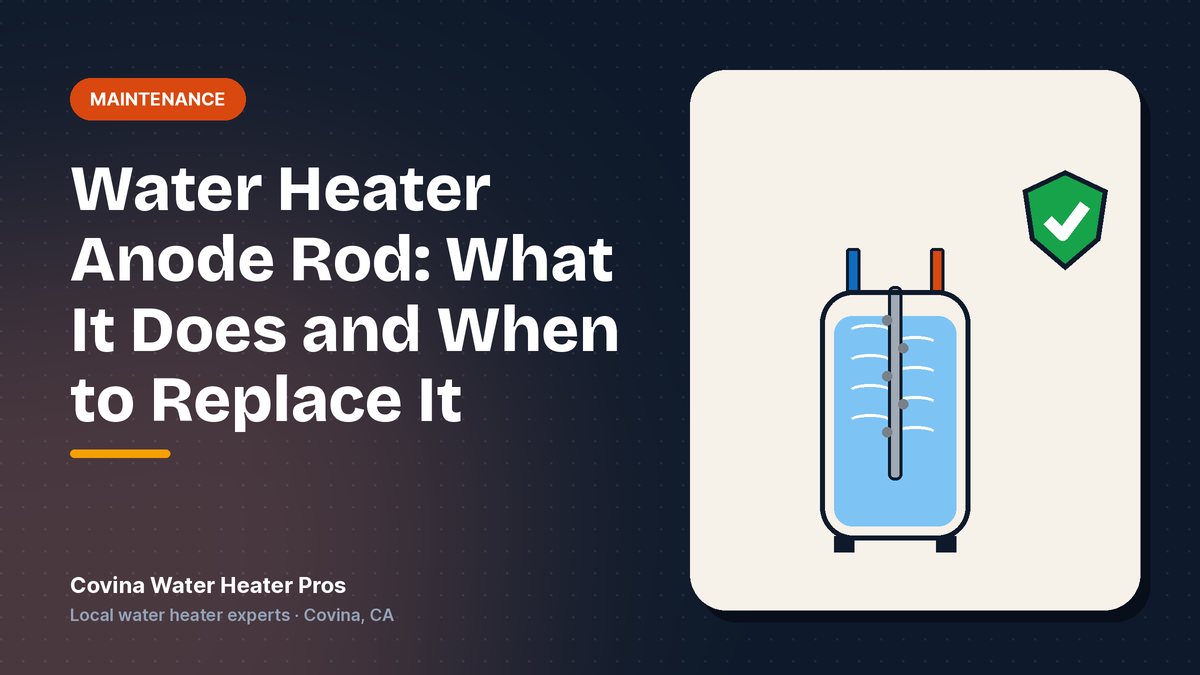
An anode rod is a metal rod (usually magnesium or aluminum) inside a tank water heater that corrodes on purpose so the steel tank doesn't. In Covina's hard water, inspect it every 2–3 years and replace it when it's worn to the core wire or less than about 1/2 inch thick, often around 3–5 years. Replacing it on time can add years to a tank's life.
Need it fixed today? Call (626) ***-****How an Anode Rod Works
Water is naturally corrosive to steel. The anode rod is made of a more reactive metal, so corrosion attacks the rod instead of the tank. As long as there's rod left, your tank is protected. Once it's gone, rust starts on the tank itself, and leaks follow.
Types of Anode Rods
| Type | Best for | Notes |
|---|---|---|
| Magnesium | Most homes | Strong protection, can cause sulfur smell |
| Aluminum-zinc | Homes with smelly water | Reduces rotten-egg odor |
| Powered (electronic) | Softened water, smell issues | Doesn't wear out, uses tiny current |
| Flexible / segmented | Low ceiling clearance | Bends for installation in tight spaces |
Not sure what's wrong with your water heater?
Talk to a local Covina technician now. Honest advice, upfront pricing.
Signs Your Anode Rod Is Worn Out
- Rusty or discolored hot water (learn more)
- Rotten-egg smell in the hot water (learn more)
- Tank is 4+ years old and the rod has never been checked
- Popping noises combined with rust in the drain water
Replacing the Anode Rod
The rod is usually under a hex head on top of the tank. Removing it takes a large socket and a lot of torque, and it may be seized. Some tanks need the water shut off and partially drained. You also need overhead clearance or a flexible rod.
Safety first: Never run a tank without an anode rod. It will corrode quickly and may void your warranty.
We check the anode on every maintenance visit and carry magnesium, aluminum-zinc and flexible rods on the truck. It's one of the best-value services we offer. See water heater repair.
This article is general information for Covina-area homeowners. Gas, venting and electrical work should be done by a licensed professional. For help with your specific water heater, call (626) ***-****.