Quick answer
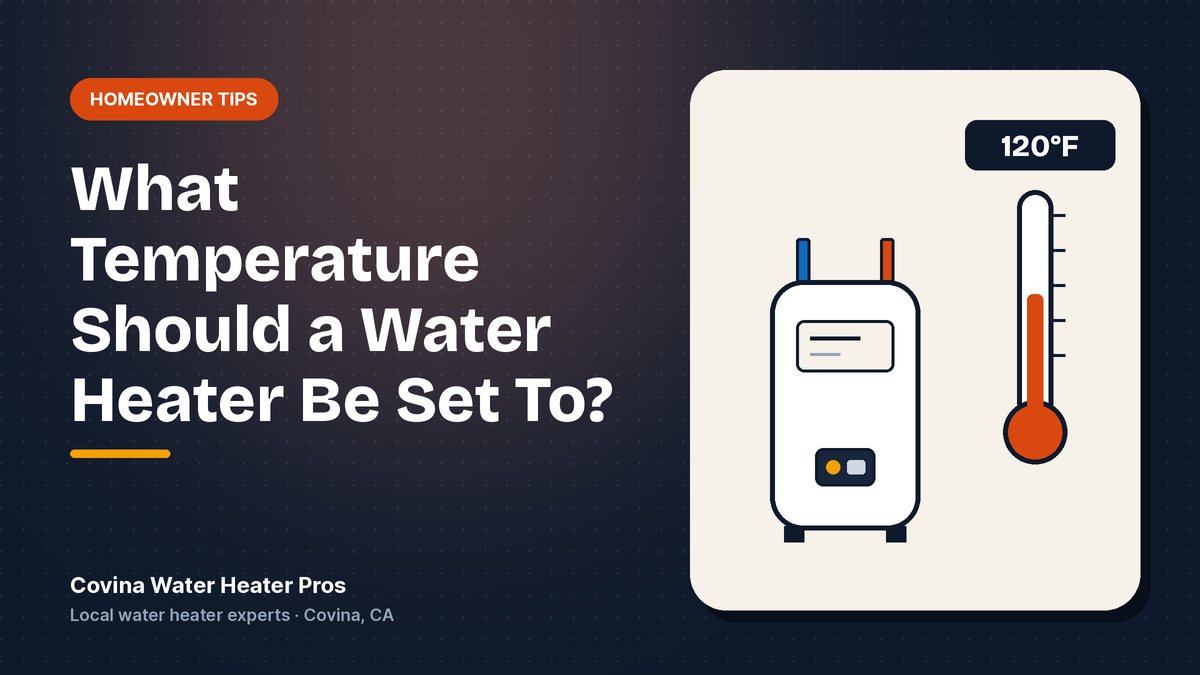
Most homes should set the water heater to about 120°F. It's hot enough for showers and dishes, reduces the risk of scalding, saves energy and slows mineral buildup in hard water. Homes with immune-compromised residents or long pipe runs may go up to 130–140°F with anti-scald valves at fixtures.
Need it fixed today? Call (626) ***-****Why 120°F?
- Safety: water at 140°F can cause serious burns in seconds; at 120°F it takes several minutes.
- Energy savings: every 10°F reduction cuts standby heat loss noticeably.
- Less scale: in hard-water Covina, hotter water drops minerals faster.
- Longer tank life: less heat stress on the tank and less sediment.
When to Go Higher
Some households benefit from 130–140°F, such as homes with someone who has a weakened immune system (higher temperatures discourage Legionella bacteria) or homes with an older dishwasher without a booster heater. If you go higher, install thermostatic mixing or anti-scald valves so fixtures still deliver safe water.
Safety first: Families with young children or elderly members should be especially careful about scalding. Keep fixture temperatures at 120°F or lower.
Not sure what's wrong with your water heater?
Talk to a local Covina technician now. Honest advice, upfront pricing.
How to Adjust Your Water Heater
Gas tank
Turn the dial on the gas control valve near the bottom. Many dials use labels like WARM, HOT, A, B, C instead of degrees. HOT or a middle setting is often close to 120°F.
Electric tank
- Turn off the breaker.
- Remove the access panels and insulation.
- Adjust both upper and lower thermostats with a flathead screwdriver to the same setting.
- Replace the insulation and panels, then restore power.
Tankless
Use the digital controller. Set it to the temperature you actually want at the tap.
Pro tip: Check with a cooking thermometer at the kitchen tap after running hot water for a minute. Adjust in small steps and wait a few hours between checks.
If Your Water Is Too Hot or Never Hot Enough
If adjusting the dial doesn't change the water temperature, a thermostat or gas valve may have failed. See no hot water from a gas water heater or electric water heater not heating, or call us for a quick diagnosis.
This article is general information for Covina-area homeowners. Gas, venting and electrical work should be done by a licensed professional. For help with your specific water heater, call (626) ***-****.