Quick answer
A leaking temperature and pressure (T&P) relief valve means either the valve is worn out or it is opening because the tank's pressure or temperature is too high. Common causes are high street water pressure, a missing or failed expansion tank, a thermostat set too high, or debris in the valve seat. Never cap or plug a leaking relief valve.
Need it fixed today? Call (626) ***-****What the T&P Valve Does
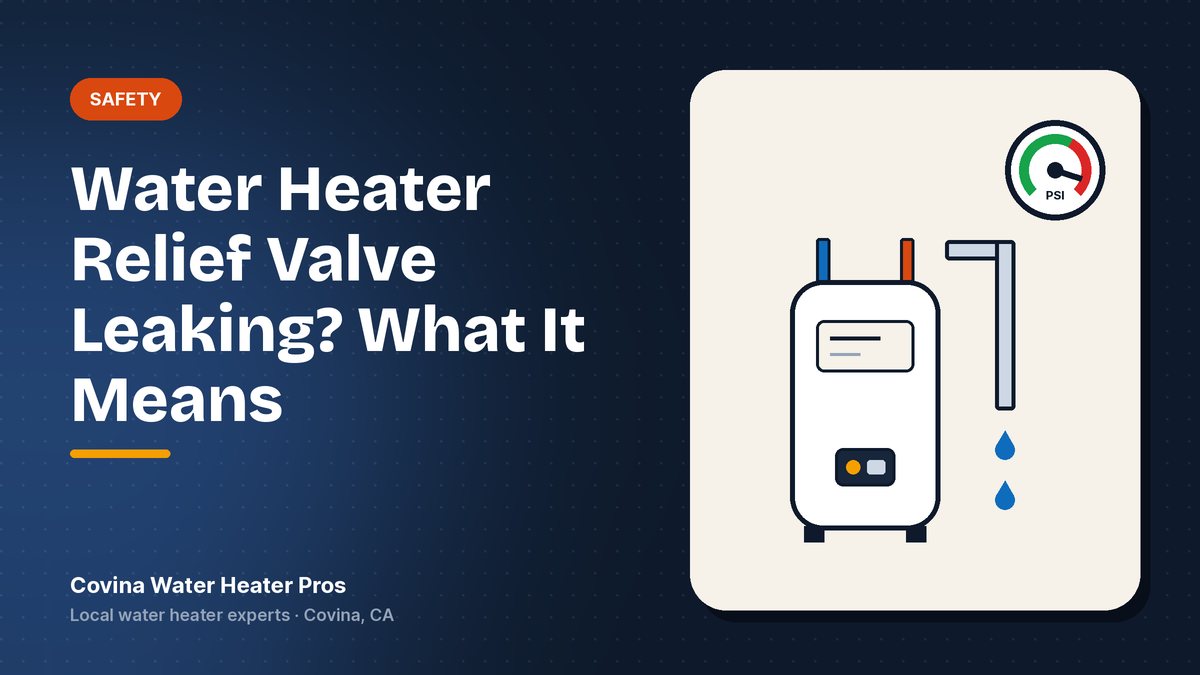
Every tank water heater has a temperature and pressure relief valve near the top. If the tank gets too hot (about 210°F) or the pressure climbs too high (usually 150 psi), the valve opens and releases water through a discharge pipe. Without it, an overheated tank could rupture.
Safety first: Never cap, plug or remove the relief valve or its discharge pipe. If it's leaking, fix the cause.
Why It's Leaking
High water pressure
Some Covina neighborhoods see street pressure well above 80 psi. If your pressure regulator has failed, the T&P valve may weep. Read about high water pressure.
Thermal expansion
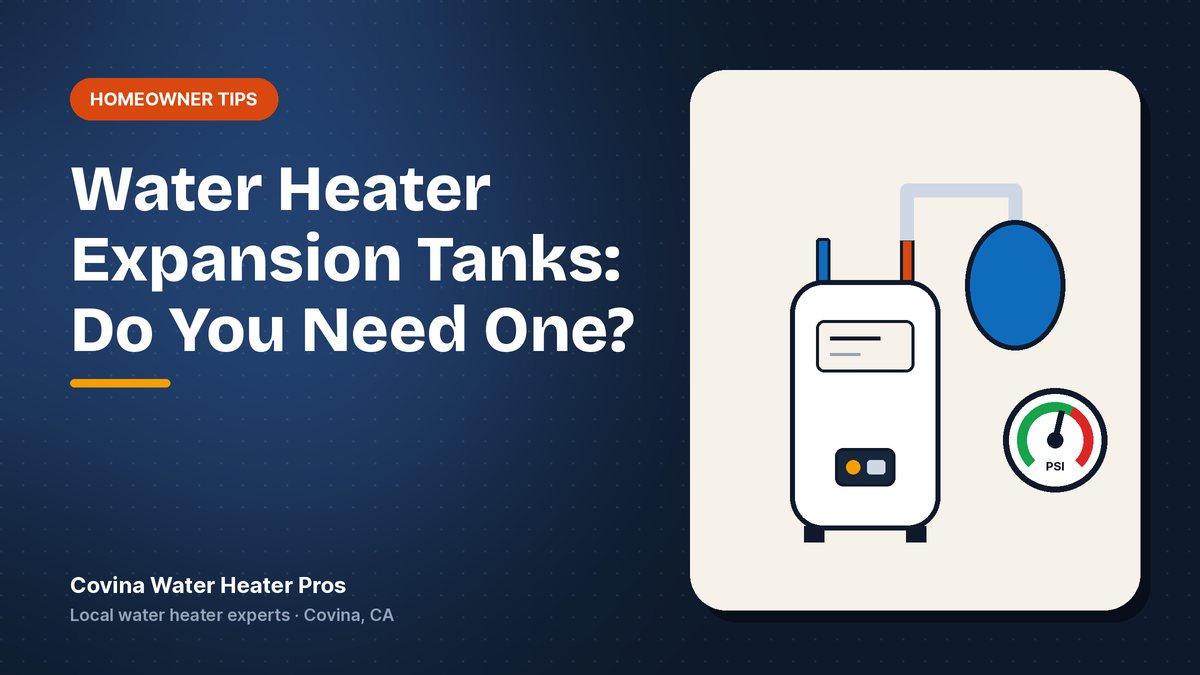
Water expands as it heats. In a closed system with a check valve or pressure regulator, that extra volume has nowhere to go, so pressure spikes every heating cycle. An expansion tank absorbs it.
Temperature set too high
A thermostat cranked up or failing can push the tank near the valve's limit.
A worn or dirty valve
Mineral deposits from hard water can keep the valve from sealing after it opens, especially after testing. Relief valves are inexpensive to replace.
Not sure what's wrong with your water heater?
Talk to a local Covina technician now. Honest advice, upfront pricing.
What to Do
- Place a bucket under the discharge pipe.
- Note whether it drips constantly or only after the heater runs.
- Check the thermostat setting.
- Call a licensed plumber to test water pressure and the expansion tank and replace the valve.
We test street pressure on every T&P call. Replacing just the valve without checking pressure often means it leaks again in a few weeks. See our water heater repair service.
Should You Test Your T&P Valve?
Manufacturers suggest lifting the lever once a year to make sure it isn't stuck. In hard-water areas, older valves sometimes don't reseal after a test. If yours is more than five years old, it's often smart to replace it during routine maintenance.
This article is general information for Covina-area homeowners. Gas, venting and electrical work should be done by a licensed professional. For help with your specific water heater, call (626) ***-****.