Quick answer
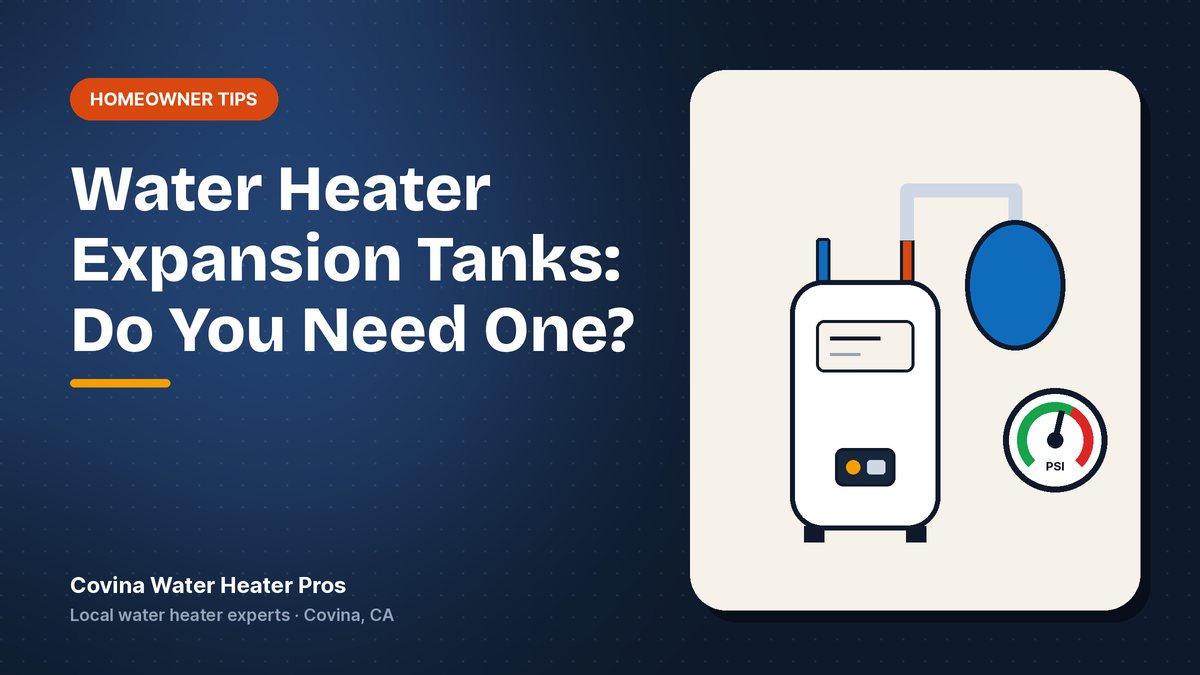
A thermal expansion tank absorbs the extra volume created when water heats up. In homes with a pressure regulator or check valve (a closed system), it's generally required by code. Without one, pressure spikes every heating cycle, which can make the relief valve leak and stress the tank, pipes and fixtures.
Need it fixed today? Call (626) ***-****Why Water Expansion Matters
Water expands as it heats. A 50-gallon tank heated from cold to 120°F gains roughly a gallon of volume. In an open system, that extra water pushes back into the city main. But most modern homes have a pressure-reducing valve (PRV) or backflow device that blocks that path. With nowhere to go, pressure rises.
Signs You Need One (or It's Failed)
- The T&P relief valve drips, especially after heating cycles
- Toilets run briefly on their own
- Banging pipes when the heater runs
- Water pressure that rises at night
- The expansion tank sounds full of water when tapped
Not sure what's wrong with your water heater?
Talk to a local Covina technician now. Honest advice, upfront pricing.
How to Check an Expansion Tank
- Tap the tank. The top half should sound hollow (air) and the bottom solid (water).
- Press the air valve on the bottom (like a tire valve). Water coming out means the internal bladder has failed.
- A plumber can check the air pressure, which should match your home's water pressure.
Pro tip: An expansion tank must be pre-charged to match your house water pressure. A tank installed straight out of the box without adjusting may not work properly.
Do You Need One?
If your home has a pressure regulator (common in Covina) or a check valve on the main line, you likely need one, and it's typically checked during permit inspections. We install and size expansion tanks with every water heater replacement where required. See our installation service and the article on high water pressure.
This article is general information for Covina-area homeowners. Gas, venting and electrical work should be done by a licensed professional. For help with your specific water heater, call (626) ***-****.