Quick answer
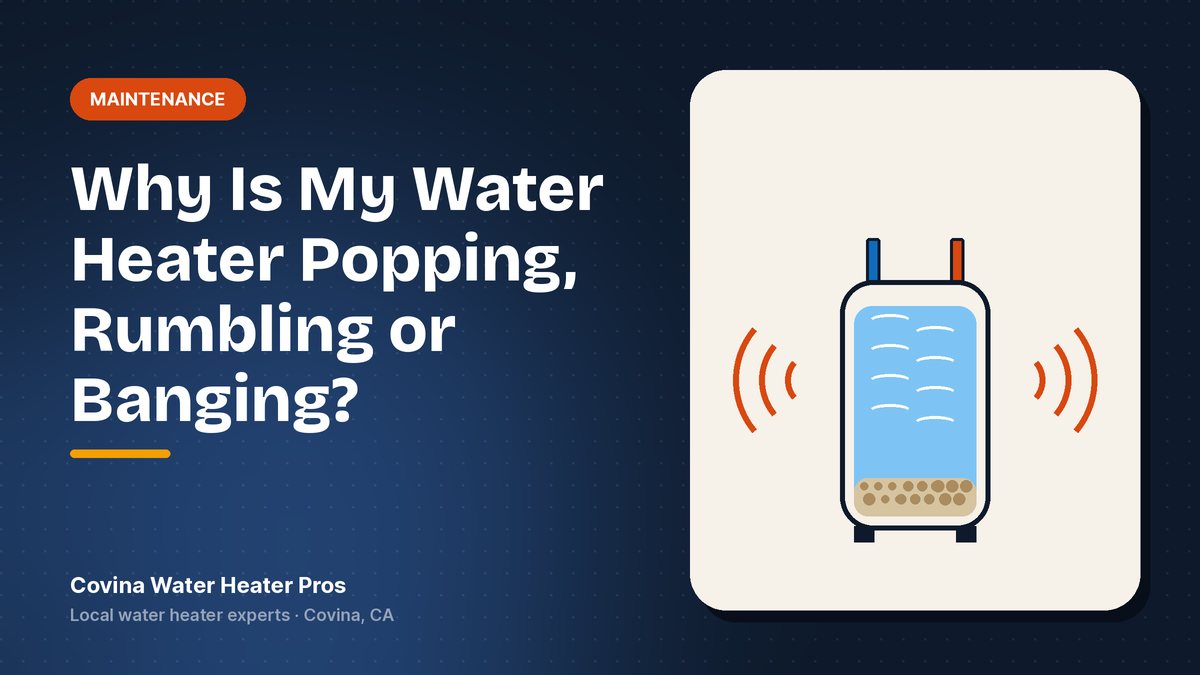
Popping and rumbling noises from a tank water heater are almost always caused by sediment buildup on the bottom of the tank. Water trapped under the sediment boils and bursts through. Flushing the tank often reduces the noise. Knocking or banging in the pipes is usually water hammer, and hissing can mean a leak or relief valve problem.
Need it fixed today? Call (626) ***-****What Each Sound Means
| Sound | Likely cause | Urgency |
|---|---|---|
| Popping / rumbling | Sediment on the tank bottom | Schedule a flush soon |
| Crackling or sizzling (gas) | Condensation dripping on the burner | Usually normal |
| Sizzling (electric) | Scale buried around a heating element | Flush or replace element |
| Knocking / banging in pipes | Water hammer or thermal expansion | Check pressure and expansion tank |
| Screeching / whistling | Partially closed valve | Open valves fully |
| Hissing near the top | Leak or T&P valve releasing | Inspect today |
Why Hard Water Makes It Worse
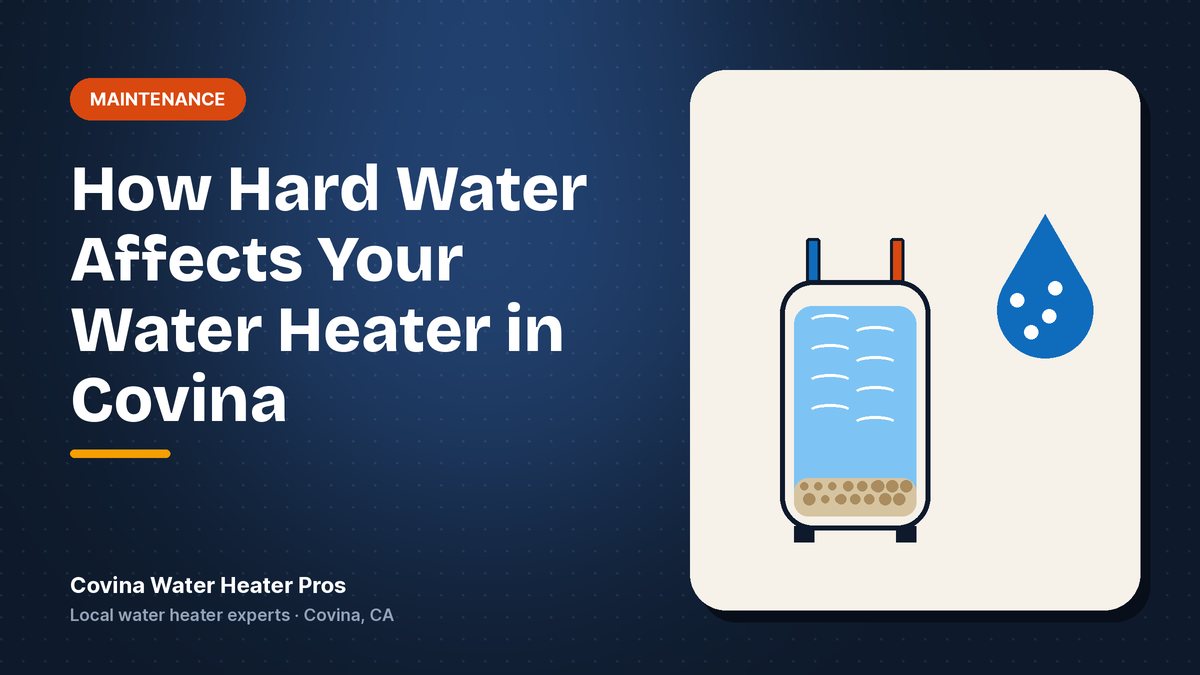
Covina's water carries a lot of calcium and magnesium. When it heats, those minerals come out of solution and sink. Over a few years you can end up with several inches of crusty sediment on the bottom of the tank.
That layer traps pockets of water against the hot steel. The trapped water flashes to steam, and the bubbles pop as they escape. The rumbling isn't just annoying. It means your burner is working harder, you're paying more on your gas bill, and the tank bottom is overheating, which shortens its life. Read more about hard water and your water heater.
Not sure what's wrong with your water heater?
Talk to a local Covina technician now. Honest advice, upfront pricing.
How to Quiet a Noisy Water Heater
- Flush the tank. Draining a few gallons out of the bottom removes loose sediment. Our step-by-step flushing guide shows how.
- Lower the temperature to about 120°F. Hotter water drops minerals faster.
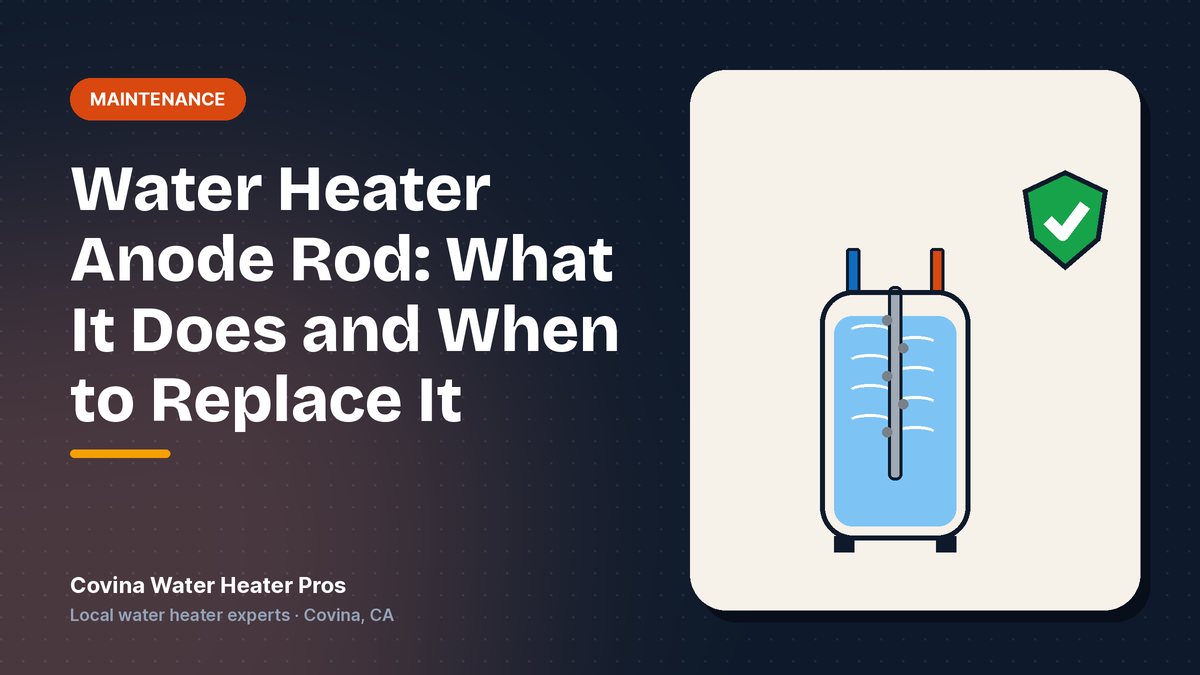
- Check the anode rod. A depleted rod means the tank is next in line to corrode.
- Consider a water softener if you want to slow buildup long term.
Pro tip: If the tank hasn't been flushed in five or more years, the sediment may have hardened and could clog the drain valve. A professional flush with the right tools avoids a stuck or broken valve.
When Noise Means It's Time to Replace
If the tank is over 10 years old and still rumbles after a flush, the sediment has probably hardened into scale that won't come out. At that point the tank is losing efficiency every day. Combined with rust in the water or moisture at the base, it's a strong sign to plan a replacement before it fails.
This article is general information for Covina-area homeowners. Gas, venting and electrical work should be done by a licensed professional. For help with your specific water heater, call (626) ***-****.