Quick answer
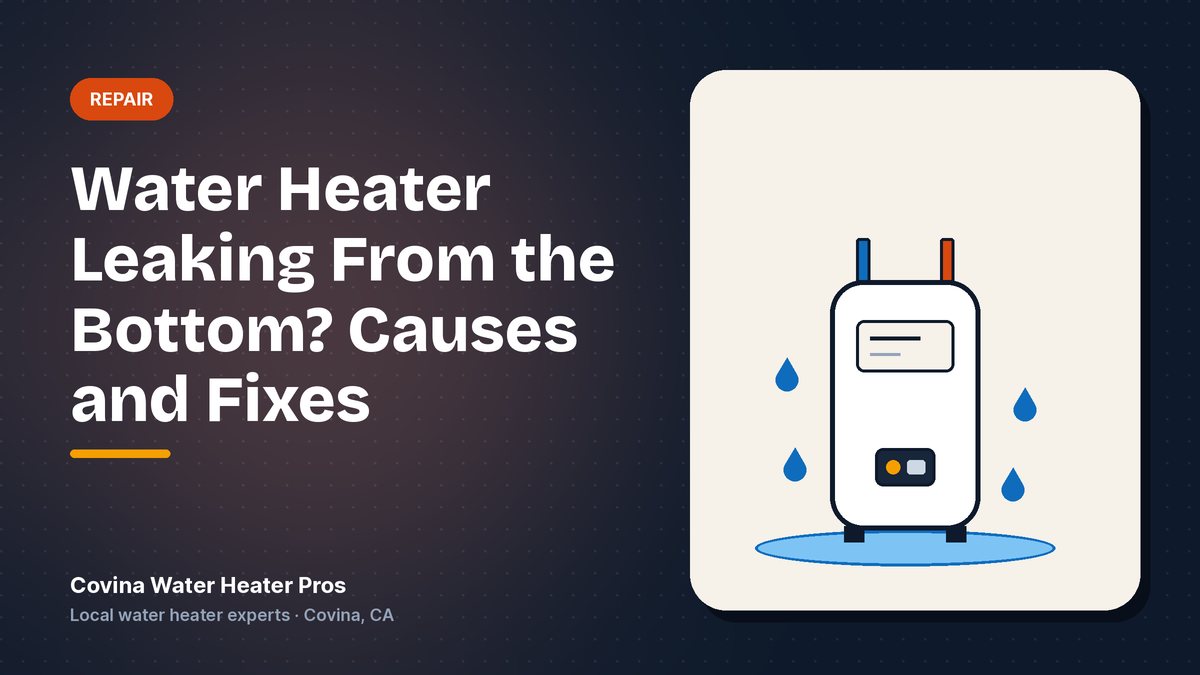
A water heater leaking from the bottom is usually caused by a loose or faulty drain valve, water running down from the temperature and pressure relief valve, condensation on a gas unit, or a corroded tank. Drain valve and relief valve leaks can be repaired. If water is coming from the tank body itself, the heater must be replaced.
Need it fixed today? Call (626) ***-****First: Stop the Water
- Turn the cold-water inlet valve (on the pipe going into the top of the tank) clockwise until it stops.
- Gas heater: turn the control knob to OFF. Electric heater: switch off the breaker.
- Mop up the water and set down towels or a pan so you can see where new drips appear.
- If the floor or drywall is soaking up water, open the drain valve with a hose to the outside to empty the tank.
Safety first: Tank water can be 120–140°F. Let it cool or use caution when draining.
The 5 Most Common Causes
1. The drain valve
The drain valve near the bottom of the tank is often plastic on builder-grade models. It can loosen or crack over time, especially after a flush. A drip from the spout or the threads is a cheap repair: tighten it, cap it, or replace it with a brass ball valve.
2. The T&P relief valve
The temperature and pressure relief valve sits on the top or side with a discharge pipe running down toward the floor. If water is coming out of that pipe, the valve is either worn or doing its job because pressure is too high. See our relief valve leak guide.
3. Condensation
Gas water heaters can produce condensation when filled with very cold water, which drips onto the burner and looks like a leak. If it disappears once the tank is hot, it's normal.
4. Leaking connections above
Water from a loose supply line or fitting on top of the tank can run down the side and pool at the bottom. Dry the tank and look for the highest wet spot.
5. A corroded tank
If the water is coming from under the jacket or the base and none of the above explains it, the steel tank has rusted through. Hard water and a depleted anode rod speed this up. A tank leak can't be patched.
Water on the floor right now?
Talk to a local Covina technician now. Honest advice, upfront pricing.
Repair vs. Replacement
| Leak source | Usual fix |
|---|---|
| Drain valve | Tighten or replace the valve |
| T&P relief valve | Replace the valve, check pressure and expansion tank |
| Inlet or outlet fittings | Reseal or replace connectors |
| Condensation | No fix needed; monitor |
| Tank body | Replace the water heater |
When the tank itself is leaking, plan on water heater replacement. We can usually install a new tank the same day.
Protect Your Floors Next Time
California code requires a drain pan for water heaters installed where a leak could cause damage, such as interior closets and attics. Adding a pan and an automatic shut-off valve is cheap insurance. Learn more about drain pans and leak detectors.
This article is general information for Covina-area homeowners. Gas, venting and electrical work should be done by a licensed professional. For help with your specific water heater, call (626) ***-****.